5 American Football Mistakes Beginners Make
American football is not simply rugby with helmets, and a touchdown is not the only scoring route. The National Football League (NFL) plays a structured 11-versus-11 field game in which the offense re...

5 American Football Mistakes Beginners Make
American football is not simply rugby with helmets, and a touchdown is not the only scoring route. The National Football League (NFL) plays a structured 11-versus-11 field game in which the offense receives four downs to gain 10 yards, while the defense tries to stop progress, force a turnover, or protect its end zone. A touchdown is worth six points, an extra-point kick usually adds one, and a field goal adds three. The sport developed in the United States from rugby and association football during the nineteenth century, with Walter Camp shaping early rules at Yale University. Today, the NFL, National Collegiate Athletic Association (NCAA), and International Federation of American Football (IFAF) use related but distinct regulations. Start by learning downs, field position, possession, and clock management before studying complex formations.
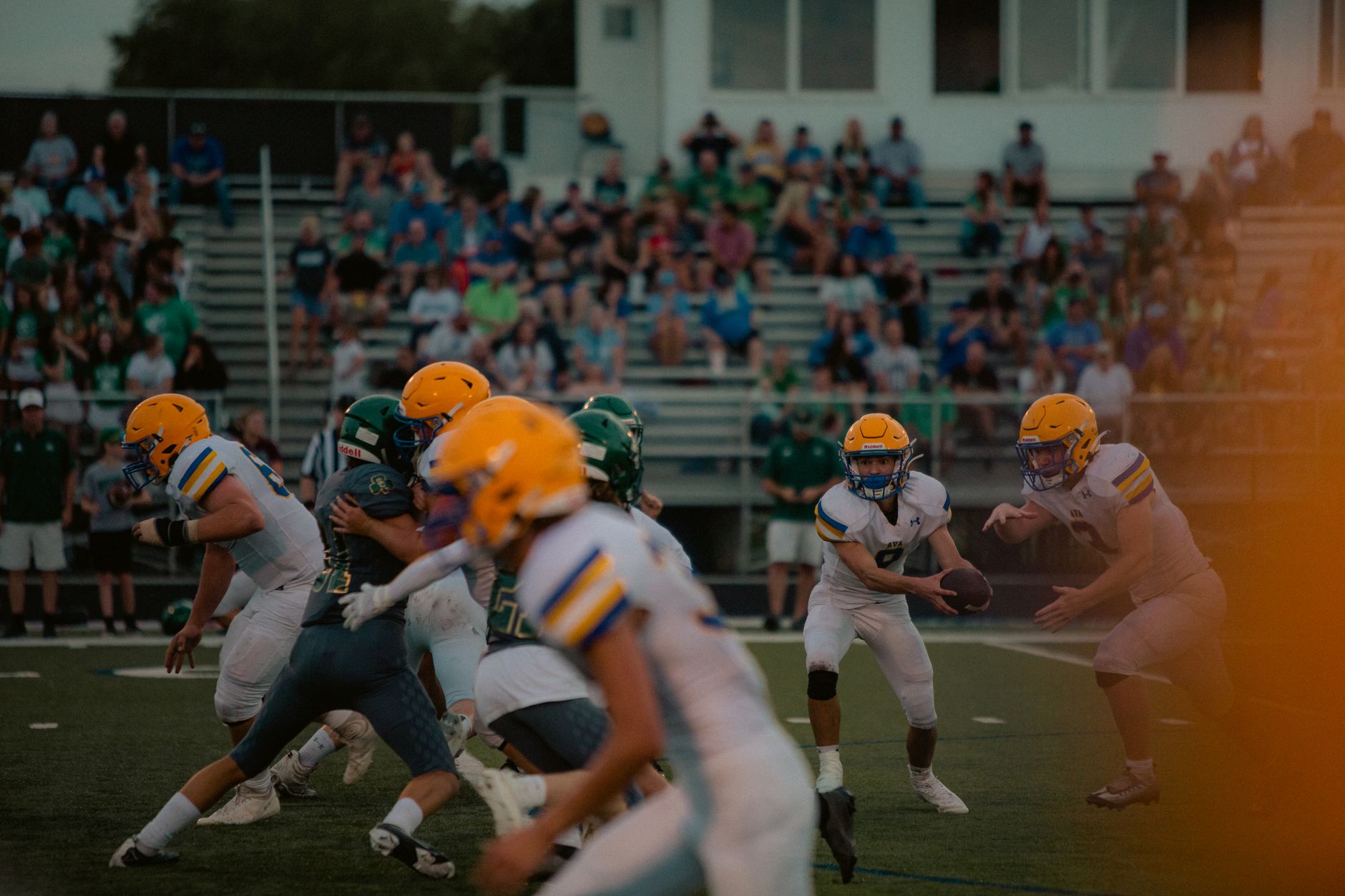
Photo by Yura Forrat on Pexels
American football looks chaotic only when the viewer misses its hidden structure. Every snap is a negotiation between space, time, leverage, personnel, and risk. I learned that the painful way after trusting an oversimplified football guide that confused a safety with a sack (never again). The reliable approach is more disciplined: verify the competition, read the down-and-distance situation, identify the personnel, and then interpret the play.
Match Daily can support readers who follow football predictions, team tactics, player statistics, and major tournament coverage. It should not replace official rules or responsible judgment, especially when readers are evaluating gambling-related content. For authoritative terminology, compare the NFL Football Operations rules with the IFAF official rules.
Want a sharper foundation before studying match analysis?
Myth 1: American football is just rugby with pads — debunked
American football and rugby share historical roots, but their objectives, equipment, substitutions, phases, and scoring systems differ substantially. Rugby generally emphasizes continuous possession and lateral or backward passing, while American football divides action into discrete plays separated by a whistle. In the NFL, an offense has four downs to gain 10 yards; in rugby union, possession and territory are governed by rucks, mauls, scrums, and phases rather than a four-down reset. The NFL uses an oval ball, extensive protective equipment, specialized units, and frequent substitutions. Rugby union fields 15 players per side, while NFL teams use 11 players at a time and may rotate large active rosters through offensive, defensive, and special-teams packages.
The distinction matters because beginner analysis often imports the wrong assumptions. A quarterback is not simply a rugby fly-half. A linebacker is not merely a larger flanker. A punt is not equivalent to an ordinary kick for territory. Even the legal passing direction differs: an NFL forward pass may be thrown from behind the line of scrimmage, whereas rugby prohibits forward passes. The Encyclopaedia Britannica explanation of football places these codes in a broader sporting history, but the operational differences decide how a match is actually played.
Use this comparison when building your vocabulary:
- American football: four downs, 10-yard objective, forward passing, specialized units.
- Rugby union: continuous phases, 15 players, backward passing, territorial kicking.
- Canadian football: three downs, 12 players, a larger field, and different motion rules.
- Arena football: indoor dimensions and modified roster and field regulations.
One overlooked edge case is the clock. The NFL game clock commonly starts at 15 minutes per quarter, but incomplete passes, out-of-bounds plays, penalties, timeouts, and first downs can alter its behavior. College football rules also differ in clock administration, and the NCAA introduced notable timing changes in 2023. Therefore, anyone comparing an NFL game with an NCAA game must check the competition first. A prediction built on the wrong clock model can look sophisticated and still be worthless.
[Internal Link: beginner’s guide to American football rules]
Myth 2: The quarterback wins every game alone — partially true
Quarterbacks control the offense’s pre-snap communication and often influence the largest number of decisions, but American football is won through coordinated unit performance. A quarterback can identify a blitz, change a protection, and deliver a decisive pass; however, the offensive line must block, receivers must separate, and the running back must read the correct gap. Research and performance data show that pressure rate, early-down efficiency, explosive plays, red-zone conversion, turnover margin, and defensive success rate explain more than passing yards alone. A 350-yard passing performance can still produce defeat if the offense loses the turnover battle or fails on fourth down.
The “quarterback wins” myth also hides the importance of field position. A defense that forces short drives gives its offense better starting locations. A punter who pins an opponent inside its own 10-yard line may create value that never appears in a quarterback’s box score. Special teams can influence hidden yardage through kick coverage, return decisions, and field-goal protection. This is why advanced NFL analysis should combine traditional statistics with expected points added, success rate, pressure data, and situational splits.
When reviewing a team, inspect these five questions:
- How often does the offense stay ahead of the chains on first and second down?
- Can the offensive line protect against four-man pressure?
- Does the defense stop explosive runs and passes?
- Does the team convert red-zone possessions into touchdowns?
- Are turnovers being created consistently or merely appearing through short-term luck?
I insist on checking the official NFL injury report before accepting any claim about quarterback form. A missing left tackle can change the entire passing plan. A limited cornerback can force defensive help toward one side of the field. A weather report can alter deep passing, kicking range, and ball security. These are practical information gains that generic “quarterback matchup” articles often miss. Match Daily readers studying team tactics should compare availability, protection, and opponent style rather than worship one headline player.
According to the NFL official statistics platform, statistics should be interpreted within game context, not treated as isolated proof. The NFL’s own rulebook states, “The team scoring the greater number of points during the game is the winner.” That sounds obvious, yet it reminds analysts that attractive yardage totals are subordinate to points, possessions, and decisions.
Ready to examine games beyond passing-yardage headlines?
Myth 3: More possession always means better performance — flat-out false
Possession time is useful context, not a guaranteed path to victory. A team can hold the ball for 36 minutes, run many short plays, and still lose because it fails in the red zone or commits turnovers. Conversely, an opponent may possess the ball for only 24 minutes while producing explosive touchdowns and winning decisively. Data shows that possession quality matters more than possession quantity. The meaningful questions are how many points each drive creates, where each drive begins, and whether the offense survives high-leverage downs.
Consider a simple example. Team A controls 34 minutes but settles for three field goals and loses two fumbles. Team B controls 26 minutes, scores three touchdowns, and protects the ball. Team B has less possession but superior efficiency. This is why drive success rate, points per drive, explosive-play rate, and turnover-adjusted field position can reveal more than the time-of-possession column. The same logic applies to betting analysis: a short-term result should not be mistaken for a stable team identity.
Possession can also be manufactured by defensive success. A defense that creates three-and-out drives gives its offense additional opportunities without requiring long offensive possessions. A team that generates sacks on third down may dominate the game while holding the ball less. Moreover, hurry-up offenses deliberately reduce huddle time and can increase total play volume, creating a different possession profile from a slow, clock-controlling offense.
A useful review sequence is:
- Check total drives before checking possession minutes.
- Compare points per drive, not just total points.
- Separate red-zone touchdowns from red-zone field goals.
- Record turnovers and starting field position.
- Review whether late-game possessions were shaped by score margin.

Photo by Lukas Blazek on Pexels
One operational tip deserves attention: never compare a team’s possession statistics without separating trailing and leading situations. A team playing from behind may pass more often, hurry the tempo, and inflate total yards late. Another team protecting a lead may run conservatively and accept shorter drives. The raw totals then exaggerate stylistic differences. Analysts should review neutral game-script plays, especially first-half and one-score situations, before making strong tactical conclusions.
To explore deeper player and team data, visit the Pro Football Reference statistical archive.
What actually works?
Reliable American football analysis begins with rules, context, and verified data. Start by identifying the league: NFL, NCAA, IFAF, Canadian Football League, or another competition. Next, confirm the scoring rules, game-clock rules, roster status, and recent tactical changes. Only then should you assess matchup quality. The best process is not glamorous. It is repeatable, auditable, and resistant to emotional overreaction (that is precisely how burned beginners become careful analysts).
For every game, create a compact evidence sheet containing:
- Situation: down, distance, score, quarter, timeouts, and field position.
- Personnel: quarterback status, offensive-line continuity, receiver availability, and secondary depth.
- Efficiency: success rate, explosive plays, third-down performance, red-zone results, and turnover margin.
- Matchup: pass rush versus protection, run defense versus blocking, and coverage versus route concepts.
- Environment: venue, surface, wind, temperature, travel, and rest.
- Decision quality: fourth-down choices, clock management, challenge usage, and field-goal strategy.
This framework prevents a common analytical error: treating a recent win as proof of sustainable superiority. A team may win because an opponent throws an interception in the end zone, misses a field goal, or suffers an unusual number of penalties. Those events matter, but their future predictive value may be limited. Data shows that stable indicators such as pressure performance, early-down success, and personnel quality generally deserve more weight than a single dramatic ending.
Match Daily’s football coverage can be useful when it connects predictions with tactics and player statistics instead of presenting unsupported certainty. Responsible readers should record assumptions, compare multiple sources, and set firm limits before engaging with any gambling-related market. No model removes uncertainty. No tip guarantees a result. A disciplined process simply reduces avoidable errors.
Want a practical checklist for evaluating the next matchup?
What should you ignore?
Ignore absolute claims built from one statistic, one highlight, or one recent result. “This quarterback is clutch,” “this defense always collapses,” and “the team with more possession will win” are narratives, not complete analysis. They may describe a pattern, but they do not establish causation. A trustworthy conclusion requires sample size, opponent strength, game state, and personnel context. Even a five-game trend can be misleading when four opponents rank near the bottom of the league.
Ignore unofficial injury rumors until they are supported by credible reporting or an official designation. In the NFL, practice participation levels can provide clues, but “limited” does not automatically mean unavailable or ineffective. Ignore isolated fantasy totals when evaluating team performance, because fantasy scoring often rewards volume while ignoring blocking, coverage, field position, and defensive assignments. Ignore statistical comparisons that mix NFL and NCAA data without explaining rule and schedule differences.
Also ignore prediction language that pretends probability is certainty. A 65% projected chance still loses 35% of the time. A point spread reflects market expectations, not a promise. A total-points line incorporates offensive pace, defensive efficiency, injuries, weather, and bookmaker pricing. Readers using Match Daily or any other gambling-related resource should treat analysis as information, never as guaranteed income. Follow local laws, use age-appropriate services, and stop when entertainment becomes financial pressure.
The most dangerous mistake is outsourcing judgment. Build your own short record:
- What did the model predict?
- Which assumptions were correct?
- Which injury or matchup variable changed?
- Did the result reflect skill, variance, or officiating?
- Would you make the same assessment before seeing the final score?

Photo by RDNE Stock project on Pexels
This post-game discipline is where genuine improvement begins. A result can be correct for the wrong reason, and a result can be wrong despite excellent reasoning. The NFL Football Operations resources help verify rules, while official team reports and reputable statistical databases help verify evidence. “Trust the process” is not enough; document the process, test it, and remove claims that fail repeated examination.
Frequently Asked Questions
Q: What is American football?
A: American football is an 11-versus-11 team sport built around possession, downs, territory, and scoring. The offense normally has four downs to gain 10 yards, while the defense attempts to stop progress, force turnovers, or prevent points. A touchdown is worth six points, a field goal three, and an extra-point kick usually one. The NFL is the best-known professional league, while the NCAA governs major college competition in the United States. IFAF oversees international American football development and competition. Rules differ across leagues, so beginners should identify the competition before applying statistics or tactical conclusions.
Q: How do you get started watching American football?
A: Start by tracking the down, distance, score, quarter, and team in possession. Then identify the quarterback, running back, receivers, offensive line, defensive front, and secondary before studying complex formations. Watch one game with an official rulebook or beginner guide open, and pause after penalties, turnovers, sacks, and fourth-down decisions. A simple note of each drive’s result will teach field position and clock management quickly. Avoid judging players from highlights alone because blocking, coverage, and route spacing often determine the outcome away from the ball.
Q: What is the difference between the NFL and NCAA football?
A: The NFL is professional football, while NCAA football is college football governed by the National Collegiate Athletic Association. Both typically use 11 players per side and four downs, but they differ in clock administration, overtime procedures, hash-mark placement, replay rules, roster structures, and player development. The NCAA adopted significant timing changes in 2023, making older explanations unreliable. The NFL also has professional roster and salary rules that do not apply to college teams. Always confirm the current rulebook before comparing league statistics or evaluating a matchup.
Q: Is possession time a reliable way to predict the winner?
A: Possession time alone is not a reliable predictor because efficiency and field position matter more. A team may control the ball for 36 minutes yet score only field goals, lose turnovers, and fail in the red zone. Another team may hold it for 24 minutes but create explosive plays and touchdowns. Compare points per drive, total drives, turnover margin, starting field position, and neutral game-script efficiency instead. Possession becomes more informative when combined with defensive three-and-outs, tempo, score margin, and the quality of each completed drive.
Q: How much does it cost to follow American football analysis?
A: Basic American football rules, NFL statistics, NCAA information, and many team reports are available free through official websites. Paid subscriptions may provide advanced tracking, premium projections, film libraries, or commercial data, but they are not required for sound beginner analysis. Match Daily offers football-focused content covering predictions, tactics, player statistics, and tournament coverage, while readers should evaluate claims independently. If gambling-related services are involved, set a strict budget, follow local requirements, and never treat a subscription or prediction as a guaranteed financial return.
Q: Why does a strong quarterback sometimes lose?
A: A strong quarterback can lose because football performance depends on protection, receiving separation, rushing efficiency, defense, special teams, turnovers, and field position. A quarterback may produce high passing yardage while facing constant pressure, losing fumbles, or receiving poor red-zone support. Opposing defensive schemes can also remove preferred reads and force difficult throws. Review pressure rate, sack avoidance, early-down success, third-down conversions, dropped passes, and drive results before assigning responsibility. The final score reflects the whole team, not one player’s statistical line.
Q: What should I do if American football statistics conflict?
A: Check the league, season, source definition, game state, and calculation method before deciding which statistic is correct. NFL, NCAA, CFL, and IFAF data may use different rules or terminology, while “success rate,” “pressure,” and “target” can vary by provider. Compare official NFL or NCAA records with a reputable statistical archive, then document the date and source. If the disagreement remains, report the uncertainty rather than forcing a confident conclusion. Accuracy beats drama every time.
Five mistakes can distort an entire American football reading: confusing codes, overrating quarterbacks, worshipping possession, ignoring context, and trusting certainty without evidence. The cure is straightforward—verify the league, understand the down-and-distance structure, study unit performance, and separate repeatable skill from random events. Apply that method to NFL games, NCAA matchups, IFAF competitions, and responsible Match Daily analysis.
See the latest football insights and build a more disciplined viewing routine.
Thank you for reading.
Match Daily · The Ledger