World Cup Football vs Club Football: Global Stakes
World Cup football is international competition organized by FIFA, while club football is the year-round game played by teams such as Real Madrid, Manchester City, and Bayern Munich in domestic and co...

World Cup Football vs Club Football: Global Stakes
World Cup football is international competition organized by FIFA, while club football is the year-round game played by teams such as Real Madrid, Manchester City, and Bayern Munich in domestic and continental leagues. The FIFA World Cup brings national teams together every four years; the 2026 edition will feature 48 teams across Canada, Mexico, and the United States. Club football operates through competitions including the Premier League, La Liga, UEFA Champions League, and Bundesliga, with matches scheduled across an annual season. The World Cup has produced 22 completed men’s tournaments since 1930, and Brazil leads the historical table with five titles. Club football offers more matches, deeper tactical continuity, and longer statistical samples. World Cup football delivers unmatched national identity, compressed pressure, and global attention. Use club form as evidence, but judge international tournaments through squad balance, travel, injuries, and tournament structure.

Photo by George Zografidis on Pexels
The most common mistake is treating World Cup football as merely “better club football.” It is not. It is a different competitive machine. Club teams train together weekly, recruit globally, and develop systems over months; national teams assemble briefly, often under enormous political and emotional pressure. That distinction changes everything, from tactical preparation to player selection. I learned to verify every tournament detail after one scam sports site published a fake qualification table and dressed it up as fact. Never accept a confident headline without checking FIFA, UEFA, or an official federation source. Match Daily follows this same discipline while covering match predictions, team tactics, player statistics, and 2026 World Cup developments. Please treat predictions as analysis, not certainty, and set a personal entertainment budget before considering any gambling-related content. (A thrilling match still does not repeal probability.)
Want a clearer evidence-based tournament overview?
The Quick Comparison
| Dimension | World Cup football | Club football |
|---|---|---|
| Organizer | FIFA | National leagues, UEFA, CONMEBOL, and clubs |
| Team identity | Nationality and eligibility | Club contracts and recruitment |
| Frequency | Usually every four years | Weekly across the season |
| 2026 format | 48 teams, three host countries | Competition-specific formats |
| Tactical preparation | Short camps and limited fixtures | Continuous training and squad development |
| Main pressure | National expectation and elimination | Titles, qualification, contracts, and finance |
| Statistical sample | Small tournament sample | Large season-long sample |
| Global meaning | National representation | Sporting institution and commercial brand |
This table reveals the central contrast: World Cup football compresses consequences, while club football accumulates them. A national team can prepare for years but may receive only a handful of competitive matches in the final tournament. A club such as Liverpool or Inter Milan can correct weaknesses through training, transfers, rotation, and repeated league fixtures. According to FIFA’s official World Cup history, the men’s competition began in Uruguay in 1930, creating a recurring global event rather than a permanent league. The UEFA Champions League offers a different model: elite clubs meet through a structured European competition while remaining connected to domestic schedules. For readers comparing team strength, this means recent club results are useful evidence, but they cannot fully predict international chemistry, defensive coordination, or knockout resilience. The careful analyst separates transferable skill from system-dependent performance.
- World Cup football tests national-team depth.
- Club football tests sustained organizational quality.
- International predictions need smaller, more context-heavy samples.
- Club predictions benefit from larger datasets and repeated matchups.
To explore tournament terminology before reading advanced analysis, see our [Internal Link: World Cup football glossary].
Why does national-team chemistry matter?
National-team chemistry matters because players have fewer training sessions to build coordinated pressing, passing patterns, and defensive coverage than club teammates receive. A talented squad can therefore underperform when its roles conflict, while a balanced group with clear responsibilities may exceed individual expectations.
The evidence is visible in how coaches use time. Pep Guardiola can rehearse Manchester City’s positional rotations throughout a season; an international manager may have only several days before a decisive qualifier. Players also arrive from different tactical schools. A midfielder accustomed to a high-possession club may be asked to defend deeper for Argentina, France, or Japan. Communication becomes decisive, especially when full-backs, central defenders, and goalkeepers have never shared a competitive back line. FIFA’s Laws of the Game define the same basic rules worldwide, but rules do not create automatic understanding. A national coach must simplify. The strongest international teams often prioritize compact spacing, transition security, and role clarity over an elaborate club-style playbook. Data from club football can identify form, but analysts should also examine minutes together, travel distance, language compatibility, and previous tournament experience. These are not decorative details. They can decide a match settled by one set piece.
Round 1: What Makes World Cup Football Historically Unique?
World Cup football is historically unique because FIFA’s quadrennial tournament turns national representation into a concentrated global championship, with 22 completed men’s editions through 2022 and Brazil holding five titles. Its rarity creates extraordinary cultural value: one tournament can define a generation, a coach, or a player’s legacy.
The first FIFA World Cup in 1930 involved 13 teams, a striking contrast with the 48-team structure planned for 2026. Uruguay won that inaugural competition on home soil, while Italy later established an early dynasty with titles in 1934 and 1938. Brazil then became the benchmark, winning in 1958, 1962, 1970, 1994, and 2002. Germany and Italy have each won four men’s World Cups, while Argentina claimed its third title in 2022 after defeating France in Qatar. These facts matter because historical prestige affects public expectations, but history is not a tactical forecast. A country’s previous trophies do not guarantee current defensive stability, goalkeeper form, or squad health. The Encyclopaedia Britannica overview of the World Cup provides useful historical context, while FIFA remains the stronger reference for official competition records. My rule is severe but sensible: verify champions, formats, and qualification claims against primary sources before repeating them.

Photo by César O'neill on Pexels
The 2026 tournament introduces an important structural change. Canada, Mexico, and the United States will host the expanded competition, with 48 teams replacing the previous 32-team field. FIFA’s published format places teams into 12 groups of four, followed by a Round of 32, creating a longer knockout pathway and more matches than the 2022 edition. This expansion increases access for confederations that historically had fewer places, but it also introduces logistical questions. Teams may travel between venues across North America, and recovery management could become more influential than raw talent. A late kickoff in Los Angeles followed by a long flight toward Toronto is not equivalent to a short domestic away trip. Analysts should record venue, climate, altitude, rest days, and time-zone movement. These variables offer a genuine information edge because casual previews often treat every group match as if it occurs under identical conditions. It does not. Tournament football is shaped by geography as much as by formation boards.
Round 2: How Do Club Tactics Differ From International Tactics?
Club tactics usually feature greater complexity because managers control recruitment, training schedules, video analysis, and repeated match preparation across an entire season. International tactics must be more economical, often emphasizing compact defensive structures, fast transitions, and set pieces that players can execute after limited rehearsal.
A club manager can build a squad around a specific mechanism. Arsenal may develop controlled buildup through a goalkeeper and center-backs; Real Madrid may exploit transition speed and elite one-versus-one talent; Bayern Munich can sustain pressure through possession and territorial dominance. National coaches inherit eligibility rules and cannot simply purchase a missing profile in January. They must select from a country’s available player pool, sometimes replacing a club system with a simpler 4-3-3, 4-2-3-1, or back-three structure. This creates a contrarian insight: the most dominant club player is not automatically the best international selection. A superstar may occupy the same zone as another indispensable player, producing tactical congestion. Conversely, a less famous midfielder who protects space may become essential. Match Daily’s tactical coverage should therefore track role fit, not just goals and assists. For responsible readers assessing predictions, ask three questions: Who protects the central channel? Who carries the ball under pressure? Who handles defensive transitions when possession is lost?
Ready to examine the tactical details behind major fixtures?
Set pieces deserve special attention. In a club season, a team may have dozens of opportunities to refine corner routines against different defensive schemes. An international side can still create a major advantage by assigning one delivery specialist, two blockers, a near-post runner, and a second-phase midfielder. The edge is measurable but easily overlooked. Analysts should compare set-piece goals, expected goals from dead-ball situations, aerial duel success, and the opponent’s concession pattern. However, small samples require humility. A team scoring three corners in four tournament matches may possess excellent design, favorable matchups, or simple variance. Do not turn four incidents into a permanent law. The same caution applies to penalty shootouts. Shootouts are influenced by goalkeeper preparation, taker selection, fatigue, and psychological pressure; they are not merely random, but they are difficult to predict precisely. The International Football Association Board Laws of the Game confirms the formal penalty-kick framework. The practical lesson is glorious and brutal: preparation improves odds, but no model can promise a winner.
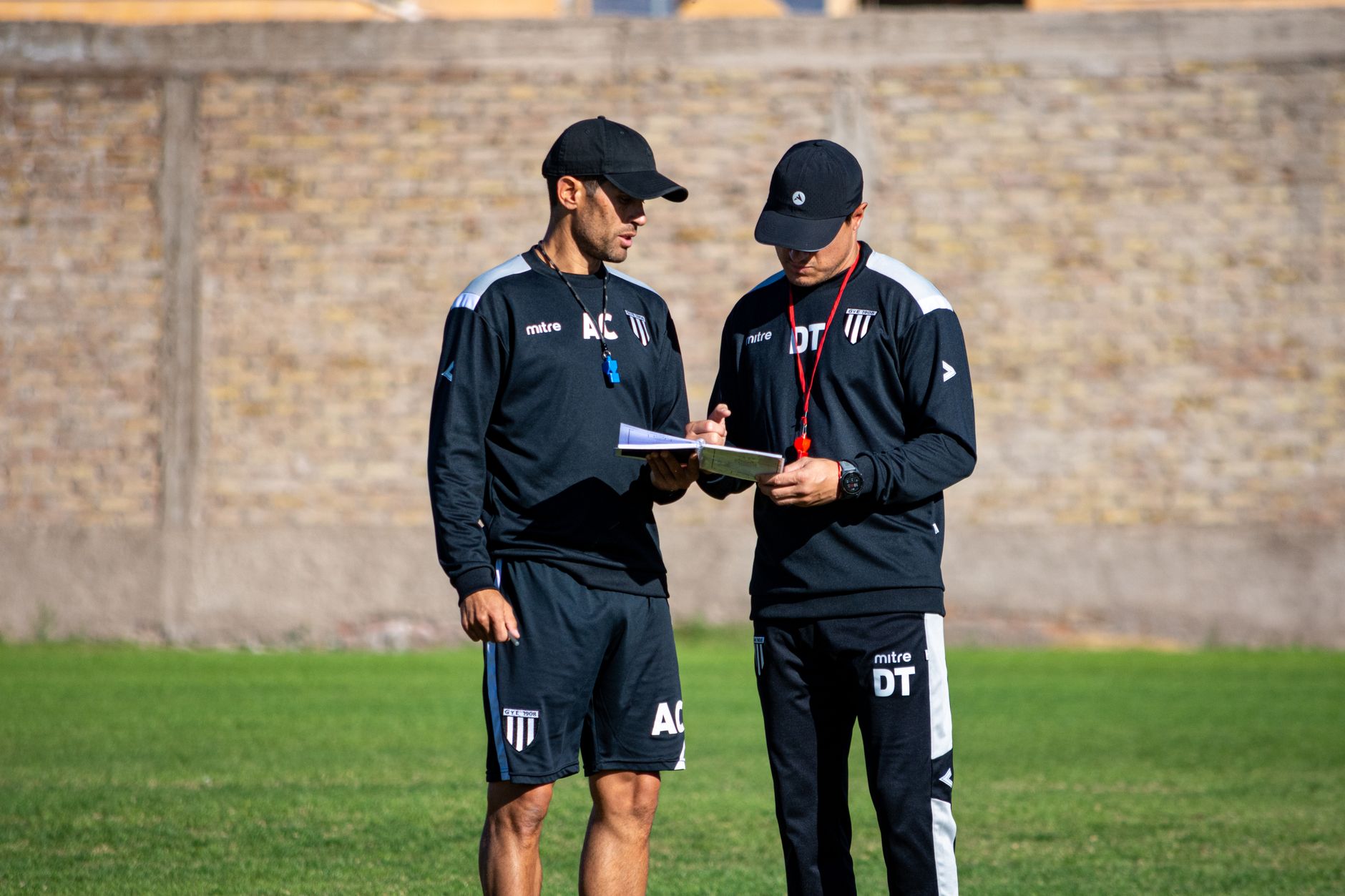
Photo by Franco Monsalvo on Pexels
Round 3: Which Competition Gives Better Player Evidence?
Club football usually gives better player evidence because a full season supplies more minutes, opponents, tactical situations, and performance observations than a short World Cup tournament. World Cup football gives stronger evidence about pressure handling, international role fit, and knockout decision-making, but its smaller sample demands careful interpretation.
A striker’s 25 league goals across 3,000 minutes provide a broader assessment than four World Cup appearances. Yet the tournament can reveal qualities club data misses. Can the striker create without service? Does the defender remain composed after conceding early? Can the goalkeeper organize unfamiliar teammates during extra time? These questions matter because international football magnifies adaptability. Analysts should combine several evidence layers:
- Club production: minutes, goals, assists, progressive passes, pressures, and defensive actions.
- International translation: role, chemistry, opponent quality, and competitive minutes.
- Tournament context: rest days, travel, climate, injuries, and knockout pressure.
- Market discipline: compare probabilities with available information rather than chasing emotional narratives.
Named entities improve the research trail. A comparison involving Kylian Mbappé, Lionel Messi, Jude Bellingham, or Vinícius Júnior should identify current role and competition context instead of relying on reputation alone. Match Daily can organize these signals for 2026 coverage, but readers should check official squad announcements and federation reports before making decisions. Please, never confuse a polished graphic with verified information. I did that once. The result was expensive embarrassment.
At approximately two-thirds of the analysis, the key insight is this: tournament performance is not a clean ranking of individual talent. It is a stress test of interaction. France may possess elite depth, Argentina may offer strong competitive identity, and Brazil may carry immense attacking expectation, yet injuries or tactical imbalance can overturn pre-tournament assumptions. The 2022 final demonstrated how rapidly momentum can swing between Argentina and France, even after one side established a substantial lead. Therefore, a serious preview should include scenario branches: what happens if the favorite concedes first, loses its holding midfielder, or faces a low block for 70 minutes? This approach is more informative than declaring a “sure winner,” a phrase responsible analysts should distrust. For gambling-related readers, local law, age restrictions, and operator licensing matter before any wager. The FIFA Legal Portal and relevant national regulators are better references than anonymous promotional pages. Evidence first. Excitement second.
Photo by Tima Miroshnichenko on Pexels
Could a more disciplined match-reading framework sharpen your preparation?
The Final Score & Who Should Pick What
World Cup football is the stronger choice for readers seeking national identity, rare-event drama, compact narratives, and historic stakes. Club football is the stronger choice for readers seeking tactical continuity, frequent matches, transfer strategy, and statistically richer evaluation. Neither competition universally defeats the other; they answer different questions about football quality and meaning.
Choose World Cup football when you want:
- National teams representing Brazil, Argentina, England, Japan, Morocco, or other football cultures.
- High-pressure knockout matches with limited recovery time.
- A global event organized around four-year cycles.
- Stories shaped by travel, national expectation, and tournament legacy.
Choose club football when you want:
- Weekly Premier League, La Liga, Serie A, Bundesliga, or Ligue 1 action.
- Long-term tactical development under coaches such as Mikel Arteta, Carlo Ancelotti, or Pep Guardiola.
- Transfer-market analysis involving Real Madrid, Manchester City, Liverpool, and Bayern Munich.
- Larger performance samples for statistical comparison.
My final score is not 1–0. World Cup football wins cultural intensity; club football wins tactical continuity. For 2026, the best analysis combines both: use club data to understand player level, then test whether that level fits a national-team structure, schedule, venue, and pressure environment. That is the responsible edge. Not certainty. Never certainty. Match Daily is designed for fans who want daily World Cup insights, but every prediction remains an estimate shaped by incomplete information. “No analysis can eliminate uncertainty” is the only honest conclusion when injuries, refereeing decisions, and moments of brilliance remain part of the sport.
Thank you for reading with the care this subject deserves. Continue with Match Daily’s 2026 tournament coverage, and please keep entertainment affordable, legal, and controlled.
[Internal Link: 2026 World Cup match predictions]
[Internal Link: team tactics and formation analysis]
[Internal Link: player statistics and tournament form]
Frequently Asked Questions
Q: What is World Cup football?
A: World Cup football is FIFA’s international tournament for national teams, normally held every four years. The men’s competition began in Uruguay in 1930, and Brazil has won the most titles with five. The 2026 edition will expand to 48 teams and will be hosted by Canada, Mexico, and the United States. Players represent eligible countries rather than the clubs that employ them during the season.
Q: How do you analyze a World Cup football match?
A: Analyze squad availability, tactical roles, recent international minutes, club form, rest days, travel, venue conditions, and opponent style. Start with official FIFA and federation information, then compare credible statistical sources rather than relying on headlines. Build several scenarios, including an early goal, a red card, and a low-block opponent. Never treat a prediction as guaranteed, and follow local gambling laws if relevant.
Q: What is the difference between World Cup football and club football?
A: World Cup football uses national teams in a short tournament, while club football uses professionally contracted players across recurring domestic and continental seasons. National teams have limited training time and cannot recruit outside their eligible player pool. Clubs can buy players, train continuously, rotate squads, and improve systems over many months. As a result, club statistics are usually broader, while World Cup results reveal pressure management and international role fit.
Q: Why does World Cup football sometimes produce surprising results?
A: World Cup surprises often result from small samples, limited preparation, injuries, tactical matchups, travel, and the high value of one decisive moment. A favorite may control possession yet struggle against a compact defense or lose its main ball-progressor. The expanded 2026 schedule may also increase recovery and logistics effects across Canada, Mexico, and the United States. Scenario-based analysis is more reliable than reputation alone.
Q: How many teams will play at the 2026 FIFA World Cup?
A: Forty-eight teams will play at the 2026 FIFA World Cup in Canada, Mexico, and the United States. The tournament is planned around 12 groups of four, followed by a Round of 32. This is a major increase from the 32-team format used through 2022. Readers should verify final scheduling and venue details through FIFA because tournament information can change.
Q: Is World Cup football free to watch?
A: World Cup football availability and cost depend on your country’s official broadcast rights. Some markets provide selected matches through free-to-air television, while others require cable, streaming, or a paid sports package. Check the broadcaster authorized in your jurisdiction before subscribing, and avoid unofficial streams that may contain malware or fraudulent payment pages. Match Daily provides analysis and coverage, not a substitute for licensed broadcast access.
Q: What should I do if a World Cup prediction or sports site seems suspicious?
A: Stop before depositing money, sharing identification, or clicking unfamiliar payment links. Verify the website address, ownership, privacy policy, licensing information, customer-support details, and official tournament data through FIFA or your national regulator. Warning signs include guaranteed wins, fake countdowns, copied logos, pressure to deposit immediately, and inconsistent odds. If you already paid, contact your bank, preserve screenshots, change exposed passwords, and report the site to the relevant authority.
Thank you for reading.
Match Daily · The Ledger