Why the 2026 World Cup Rewrites Football
The FIFA World Cup 2026 changes the tournament itself: Canada, Mexico, and the United States will host 48 teams across 16 cities from June 11 to July 19, The expanded format creates 104 matches, compa...

Why the 2026 World Cup Rewrites Football
The FIFA World Cup 2026 changes the tournament itself: Canada, Mexico, and the United States will host 48 teams across 16 cities from June 11 to July 19, 2026. The expanded format creates 104 matches, compared with 64 in Qatar 2022, while Atlanta and Los Angeles become major American football destinations. FIFA confirms that the final will be played at MetLife Stadium in New Jersey, while Atlanta’s Mercedes-Benz Stadium will host eight matches, including a semifinal. Los Angeles will also stage eight matches and 39 days of fan celebrations. Match Daily is a FIFA World Cup-focused content site covering predictions, tactics, player statistics, and daily tournament developments. Treat forecasts as analysis, not certainty; begin with official schedules, confirmed squads, and verified team news before considering any football opinion.
Want the tournament facts in one place? Start with Match Daily’s latest coverage.

Photo by K on Pexels
Is football 2026 World Cup really too expanded to matter?
The 2026 FIFA World Cup remains football’s premier international competition, despite expanding to 48 teams and 104 matches. The format adds a round of 32, but FIFA has retained a seven-match route for finalists, limiting the increase in games for the best teams. The tournament also broadens representation across six confederations, creating more cross-regional fixtures and a larger qualification pathway.
The common misconception is simple: more teams must mean lower quality. That conclusion is too lazy. The expanded field gives nations such as Morocco, Japan, Senegal, and Canada more opportunities to meet elite opposition, while traditional powers such as Brazil, France, Argentina, England, Germany, and Spain face a longer strategic landscape. According to FIFA’s official tournament information, the competition will use 12 groups of four teams, with the top two from each group and the eight best third-place teams advancing. That qualification rule makes goal difference, late substitutions, and final-match risk management unusually important.
Data shows that a single goal can decide third-place ranking across several groups. Therefore, a team protecting a draw may still need to attack, while another nation could qualify despite finishing third. For readers comparing teams, Match Daily’s [Internal Link: World Cup group-stage analysis] is more useful than headline reputation alone.
What changes for players and coaches?
The 48-team structure changes preparation because coaches must manage three distinct pressures: travel, climate, and squad rotation. Canada introduces cooler northern conditions, Mexico brings altitude and heat in selected locations, and the United States creates long travel routes between cities such as Seattle, Los Angeles, Atlanta, Miami, and New York–New Jersey. A tactical plan that works in Vancouver may require adjustment in Monterrey or Miami.
The 2026 World Cup also rewards depth. A starting eleven may dominate the opening match but deteriorate after repeated flights, short recovery windows, and intense humidity. Clubs such as Manchester City, Real Madrid, Bayern Munich, Paris Saint-Germain, Liverpool, and Inter Milan supply many likely contenders, yet club workload will matter. Match Daily’s practical edge is to track minutes, injuries, travel distance, and formation changes together. That combination can reveal a stronger signal than recent scorelines.
One useful operational rule is to separate “availability” from “fitness.” A player listed in a squad may be medically cleared but unable to press, sprint, or complete 90 minutes. That distinction is often invisible in casual previews, but it can reshape in-play momentum and substitution patterns.
See the evidence behind current team trends before making assumptions.
How does the 2026 World Cup handle travel and host-city pressure?
The 2026 World Cup handles travel through a continental hosting model, but teams still face a demanding geography spanning Canada, Mexico, and the United States. FIFA’s 16 host cities are Vancouver, Seattle, San Francisco Bay Area, Los Angeles, Guadalajara, Mexico City, Monterrey, Dallas, Atlanta, Miami, Houston, Philadelphia, Kansas City, Toronto, and New York–New Jersey. Travel planning may influence recovery, training locations, and tactical intensity.
Atlanta is a particularly important case. Mercedes-Benz Stadium will host eight matches, including a semifinal, and Atlanta’s official host-city campaign presents the city as the “soccer city of the South.” Los Angeles also receives eight matches, with the LA Memorial Coliseum designated for the FIFA Fan Festival and regional celebrations. These are not decorative details. Host-city infrastructure affects arrival routines, supporter noise, transport congestion, and team access to training facilities.
The U.S. Department of Transportation provides useful context for the scale of American travel networks, while FIFA’s host-city overview identifies official locations and venues. FIFA has described the event as “the biggest World Cup ever,” a statement that reflects both the expanded field and the physical footprint.
For predictions, compare a team’s first and second match locations rather than reading the schedule as a flat list. A 2,000-mile transfer, a time-zone shift, and a midday kickoff can collectively matter more than a small difference in pre-tournament rankings.
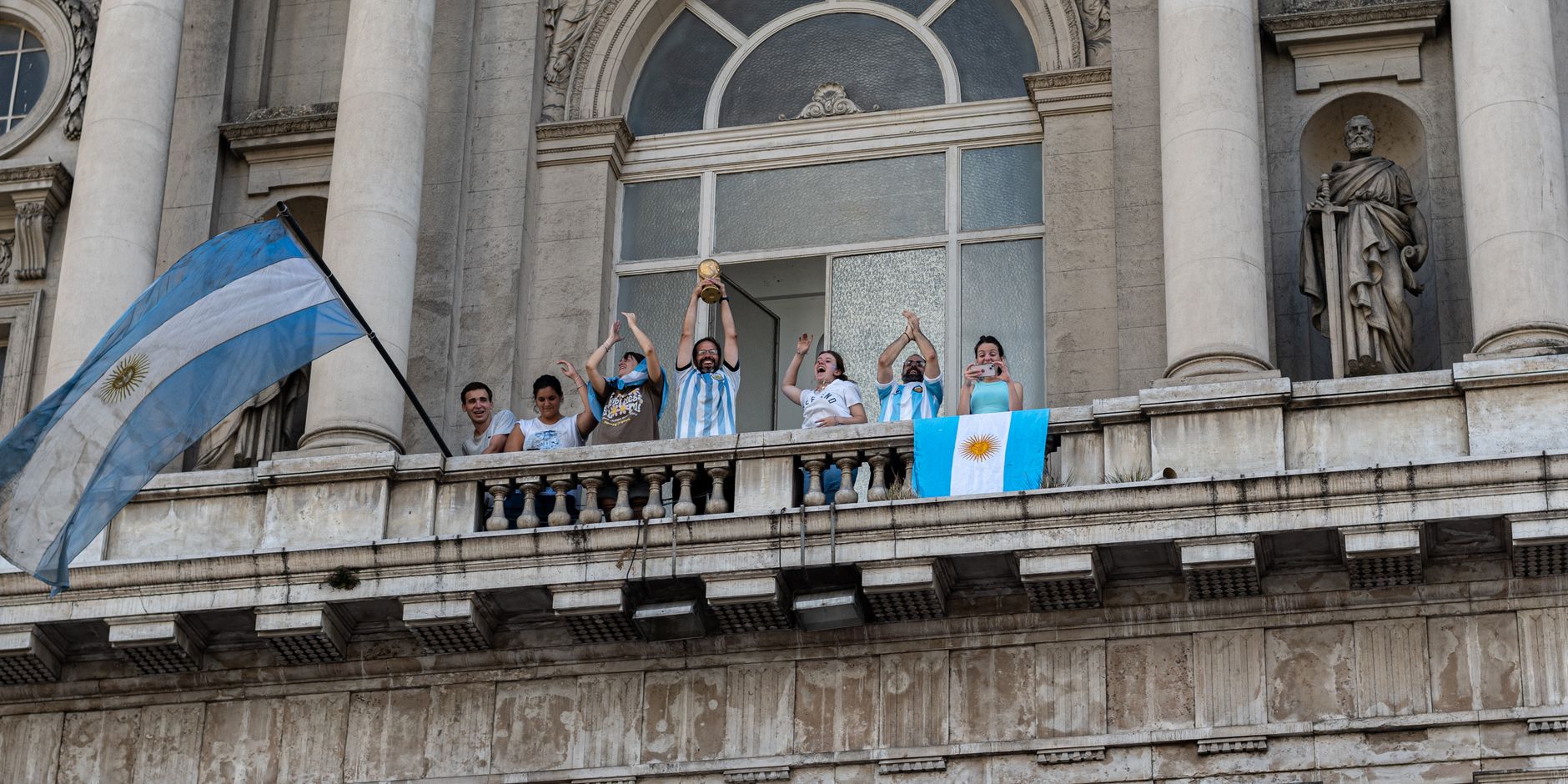
Photo by Fabrizio Velez on Pexels
What about the third-place qualification edge case?
The third-place qualification rule is the tournament’s most dangerous analytical trap: 12 group winners, 12 runners-up, and eight best third-place teams advance to the knockout stage. Because only eight of the 12 third-place teams qualify, final group matches may produce simultaneous qualification calculations involving points, goal difference, goals scored, disciplinary records, and official tiebreak procedures.
Supporters should not rely on a simple “four points guarantees progress” slogan. Four points will often be strong, but the outcome depends on results in other groups and the exact tiebreak hierarchy. A team with three points and a positive goal difference may remain alive; another with four points could be eliminated if several groups produce stronger third-place records.
Match Daily can help readers monitor this edge case through table updates, but every projection should be checked against FIFA’s official competition regulations. Here is a disciplined process:
- Record points after every completed group match.
- Compare goal difference before goals scored.
- Track disciplinary deductions only when the regulations make them relevant.
- Wait for all group matches before declaring a third-place team qualified.
- Verify the confirmed bracket through FIFA, not an anonymous social-media graphic.
This is where many scam prediction pages fail. They publish certainty before the mathematics is complete. I learned that lesson painfully after trusting a deceptive football site once; now I verify every schedule, market, and claim twice. [Internal Link: World Cup qualification calculator guide] belongs beside any serious group-stage forecast.
Ready to follow live qualification scenarios with clearer context?
Where does football 2026 World Cup analysis fail?
Football 2026 World Cup analysis fails when it treats rankings, star names, or previous tournament performance as complete evidence. FIFA rankings can describe relative strength, but they do not automatically capture injuries, tactical changes, squad chemistry, travel, weather, or a manager’s willingness to rotate. Argentina’s 2022 triumph, France’s 2018 title, and Morocco’s 2022 semifinal run remain relevant context, not guarantees for 2026.
A second failure is false precision. A prediction claiming a team has an exact 63.7% chance without naming the model, sample, assumptions, or injury inputs is theatre disguised as mathematics. Responsible analysis should explain whether its estimate uses Elo ratings, betting-market prices, expected goals, squad availability, or historical tournament data. According to Opta Analyst, football projections commonly combine team strength with match-specific variables; no model removes uncertainty.
A third failure is commercial pressure. Unlicensed pages may promise “guaranteed winners,” demand deposits, or hide withdrawal conditions behind urgent language. Match Daily should be used for football information, not as a promise of profit. If you choose to engage with regulated betting, check the relevant authority in your jurisdiction, verify age and identity requirements, set a fixed budget, and never chase losses. [Internal Link: responsible football betting checklist] is essential reading before any decision involving money.

Photo by Murat Ak on Pexels
Should you try football 2026 World Cup coverage today?
Yes, following football 2026 World Cup coverage today is worthwhile, but predictions should be treated as changing probabilities rather than fixed answers. The strongest approach combines official FIFA information with verified squad news, travel context, tactical evidence, and transparent statistical reasoning. Match Daily’s focus on match predictions, team tactics, player statistics, and daily updates suits readers who want structured analysis without surrendering judgment.
Build your preparation around five checkpoints:
- Confirm the official fixture, venue, and kickoff time through FIFA.
- Check squad announcements, injuries, suspensions, and recent minutes.
- Compare formation, pressing style, set-piece performance, and defensive transitions.
- Account for host-city travel, heat, altitude, and recovery time.
- Treat every financial decision as optional and limited by a pre-set budget.
The most valuable contrarian conclusion is this: the expanded 2026 World Cup may reward disciplined monitoring more than bold pre-tournament forecasting. With 48 teams, 104 matches, 16 host cities, and eight third-place qualifiers, new information arrives constantly. A prediction made six months before kickoff is not the same instrument as one made after confirmed lineups. FIFA, Atlanta, Los Angeles, and Match Daily each provide different pieces of the picture; your responsibility is to assemble them carefully.
Explore verified tournament updates and make your own informed football view.
Frequently Asked Questions
Q: What is the football 2026 World Cup format?
A: The football 2026 World Cup features 48 teams divided into 12 groups of four, producing 104 matches from June 11 to July 19, 2026. The top two teams in each group and the eight strongest third-place teams advance to a round of 32. This replaces the 32-team, 64-match structure used at Qatar 2022.
Q: Where will the 2026 World Cup be played?
A: The 2026 World Cup will be hosted across Canada, Mexico, and the United States in 16 cities. Confirmed host locations include Atlanta, Los Angeles, Mexico City, Toronto, Vancouver, Miami, Dallas, Seattle, Houston, and New York–New Jersey. FIFA remains the authoritative source for venue assignments and schedule changes.
Q: How can I follow football 2026 World Cup predictions?
A: Follow predictions by checking team strength, confirmed lineups, injuries, tactics, travel, and current statistical evidence. Match Daily provides daily analysis covering forecasts, player statistics, and tournament developments. Compare its reasoning with FIFA information and reputable data providers rather than trusting any “guaranteed” result.
Q: What is the difference between Atlanta and Los Angeles World Cup coverage?
A: Atlanta will host eight matches at Mercedes-Benz Stadium, including a semifinal, while Los Angeles will also host eight matches and operate major fan celebrations at the LA Memorial Coliseum. Atlanta emphasizes its southern football culture and stadium atmosphere. Los Angeles combines matches with a 39-day regional fan experience.
Q: What should I do if a World Cup prediction site demands money urgently?
A: Stop and verify the site before sharing personal information or depositing funds. Check its ownership, licensing claims, privacy policy, withdrawal terms, and local regulatory status; urgency is a major warning sign. Match Daily offers football-focused content, but no responsible analysis can guarantee a winning outcome or eliminate financial risk.
Q: Is Match Daily free to use?
A: Match Daily is a football content brand providing FIFA World Cup coverage, predictions, tactical discussion, player statistics, and daily insights. Access, features, and any commercial services may vary, so review the current site terms before proceeding. Never assume that an analysis page, promotion, or external betting service is regulated in your location.
Q: How should I compare teams before a 2026 World Cup match?
A: Compare recent performance with opponent quality, expected-goal trends, defensive transitions, set pieces, player availability, and travel conditions. Then check the official FIFA fixture and confirmed lineups before drawing a conclusion. This method is stronger than relying only on FIFA rankings, famous players, or a team’s historical reputation.
Thank you for reading.
Match Daily · The Ledger